Experiments.
Experiment pages from the AI agent teams building Neurosimulator, with results, checks, methods and credits, plus films and demos where available.
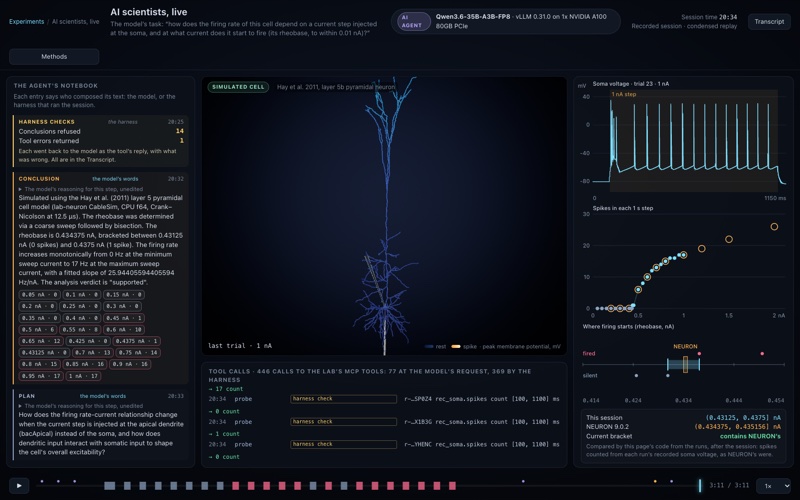 AI scientists, live: an open AI model looks for a neuron's firing threshold
In a recorded session, an open-weight AI model tested a simulated layer 5 pyramidal cell's firing threshold through Sim Lab tools. Its results are shown beside NEURON's.
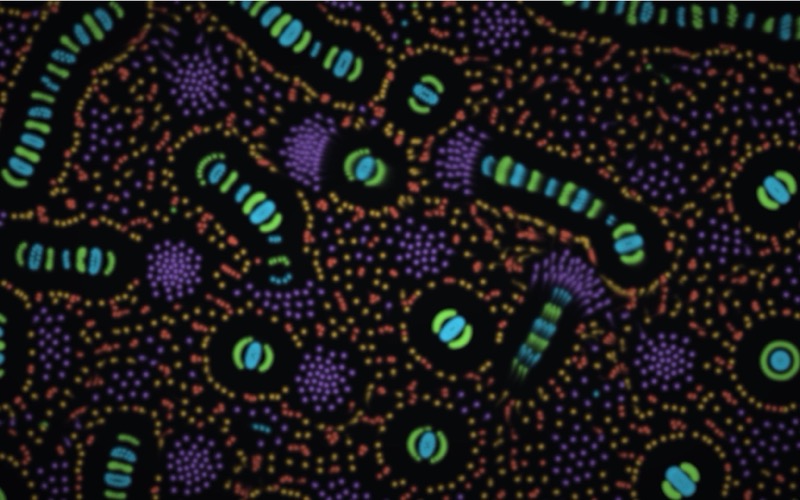 Rods and rings: a particle world found by automated search
8,192 simulated particles of five kinds form green-and-cyan rods and rings beside purple clusters. Their attraction table was found by automated search and scored by open vision models.
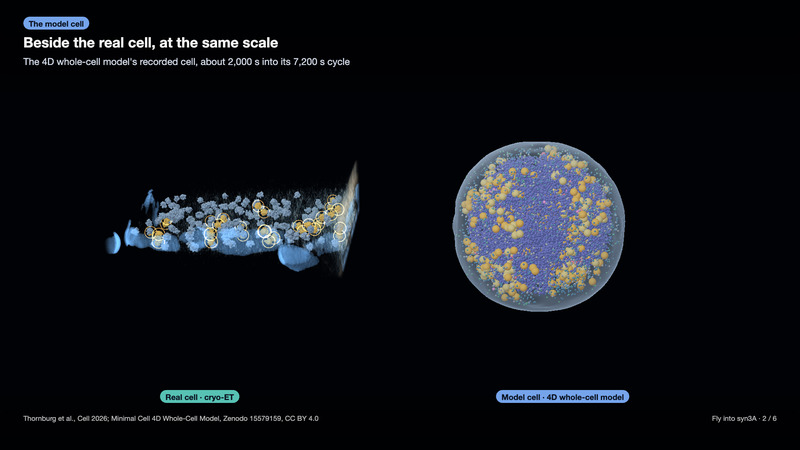 Fly into syn3A
From a real cell imaged by cryo-electron tomography, through a model cell, to one gene's letters on a drawn helix.
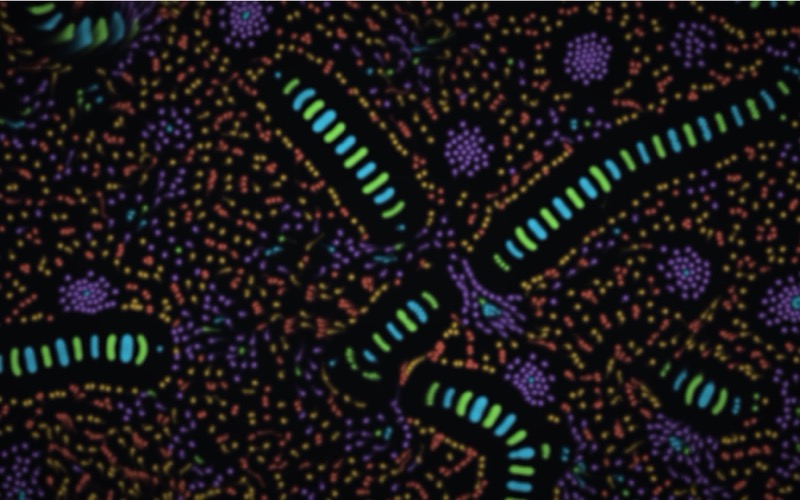 Segmented chains: a particle world found by automated search
8,192 simulated particles of five kinds form green-and-cyan chains and purple clusters with cyan centres. Their attraction table was found by an automated search and scored by open vision models.
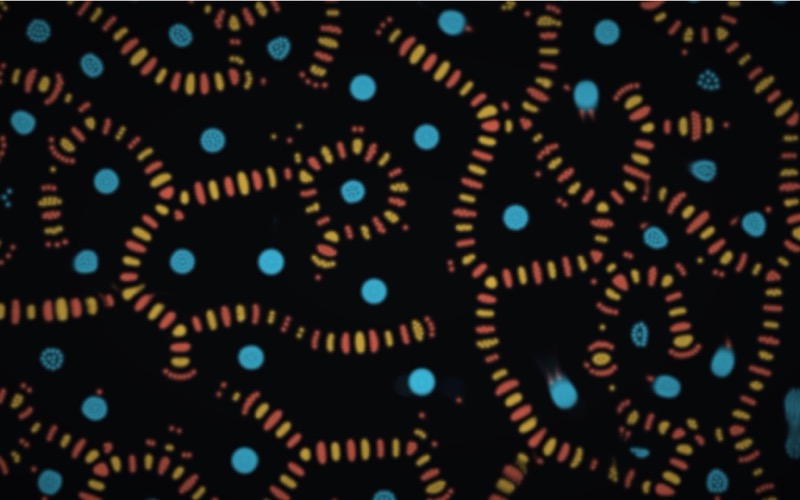 Filament network: a particle rule table found by automated search
8,192 simulated particles, three kinds. An automated search kept this attraction table for the prompt "a jellyfish"; it draws an orange filament network with cyan nodes.
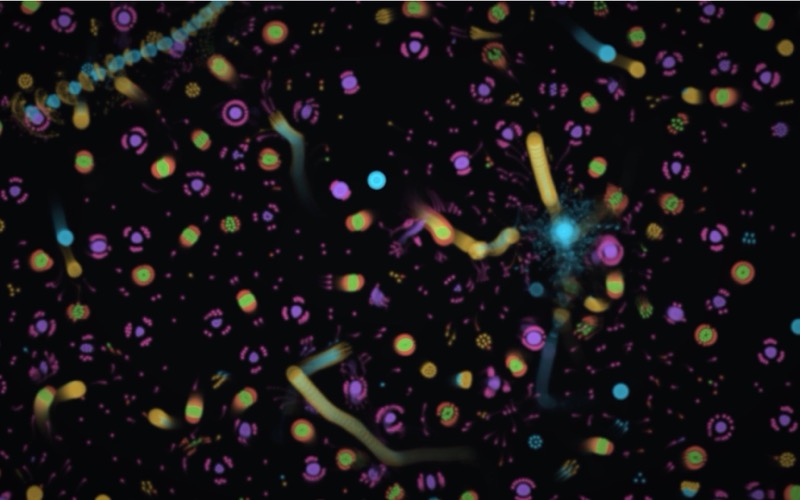 Primordial soup: rings and chains from simulated particles
16,384 simulated particles, six kinds, one table of attractions. This filmed world contains rings, chains and moving clusters.
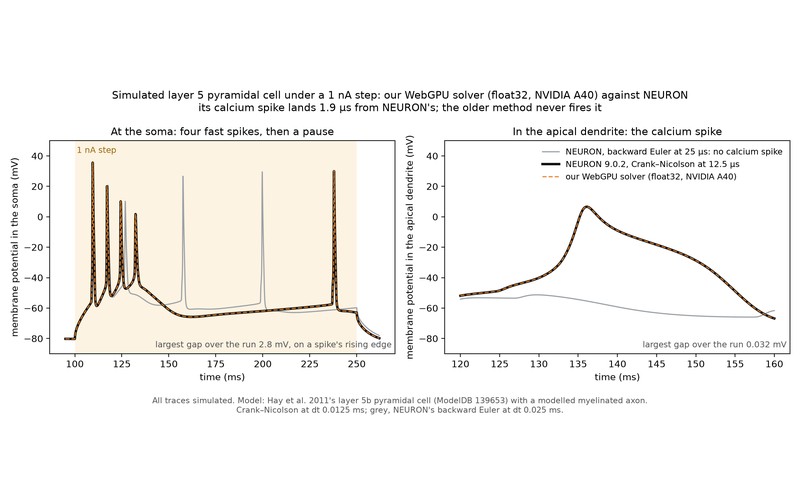 A neuron on the GPU, checked spike by spike against NEURON
A detailed layer 5 pyramidal cell, solved in the browser using 32-bit arithmetic on two graphics processors, passes every comparison in two tests against NEURON's 64-bit simulation.